



The Foundation of Flawlessness: Why Defects Occur
Before delving into specific defects, it is crucial to understand that injection molding is a battle against the fundamental properties of polymers. Plastic materials undergo thermal expansion, melt, flow, and then cool and shrink. Imbalances in pressure, temperature, or cooling rates during this cycle are the primary catalysts for defects. These imbalances can originate in three distinct areas: part design (e.g., inconsistent wall thickness), mold design (e.g., poor gate location or inadequate cooling channels), or process parameters (e.g., incorrect injection speed or holding pressure). Effective defect prevention requires a holistic approach that considers all three domains simultaneously.
Aesthetic and Structural Surface Defects
The most immediately apparent defects are those that mar the surface of a part. These flaws can render a component cosmetically unacceptable, even if its mechanical function remains intact.
Flow Lines and Haze
Among the most common cosmetic issues are flow lines—wavy, ring-shaped patterns or streaks that appear on the part's surface. Typically exhibiting a slightly different color or gloss level than the surrounding material, flow lines occur when the molten plastic cools at different rates as it travels through the mold. This can be triggered by variations in wall thickness that cause the melt front to hesitate, or by injection speeds that are too slow, allowing the material to solidify prematurely. A related phenomenon is gloss variation or haze, often caused by the mold steel temperature being too low, which chills the outer layer of plastic too quickly.
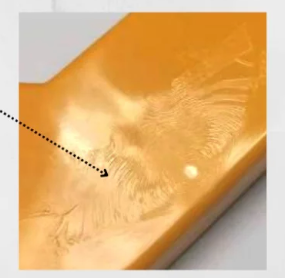
Remedies: Solutions for flow lines often involve increasing injection speed and pressure to ensure the cavity fills before the material has a chance to cool. Simultaneously, raising the mold temperature allows the plastic to flow more freely. From a design perspective, radii should be used instead of sharp corners to promote smoother flow, and gate locations should be strategically positioned to ensure uniform filling of the cavity .
Jetting
While flow lines are related to the melt front's progress, jetting is a distinct defect caused by the fountain flow of material. It occurs when the molten plastic is pushed through a restrictive gate at high speed and squirts into the cavity without making contact with the mold wall. This jet of material folds over itself like a snake, creating a visible, meandering pattern on the part surface with weak bonds between the layers. This results in both an unsightly appearance and a significant structural weak point.
Remedies: The most effective solution is to redesign the gate. Moving the gate so that the melt impinges directly against a core or cavity wall breaks the jet and establishes a smoother, progressive flow front. Alternatively, reducing injection speed during the initial filling stage can prevent the jet from forming in the first place .
Defects Arising from Material Shrinkage
All polymers shrink as they cool from melt temperature to room temperature. Managing this inherent shrinkage is critical to preventing defects.
Sink Marks and Voids
Sink marks appear as localized depressions or dimples on the surface of a molded part. They are the visible consequence of volumetric shrinkage, most commonly occurring in thicker sections, such as behind ribs, bosses, or at natural thickening points. As the material in the core of a thick section cools and shrinks, it pulls the already-solidified surface layer inward. If the surface layer is too weak to resist this pulling force, a sink mark forms. In extreme cases, if the surface is strong enough to resist sinking but the core shrinkage is severe, a void (an empty pocket of air) can form inside the part, compromising structural integrity without any visible warning.
Remedies: Design discipline is the first line of defense. Maintaining uniform wall thickness throughout the part is paramount. When thicker sections are necessary, "coring out" the area (removing material from the backside) is preferred. For structural ribs, a golden rule is to keep the rib's base thickness no more than 50-60% of the adjacent wall thickness . During processing, applying adequate and prolonged holding pressure is essential. The hold pressure packs additional material into the cavity as the part shrinks, compensating for the volume loss .
Warpage
Perhaps the most difficult defect to correct, warpage refers to the twisting, bending, or distortion of a part, causing it to deviate from its intended geometry. Warpage is the result of differential or non-uniform shrinkage across different areas of the part. If one region cools and shrinks faster than another, the resulting internal stresses deform the part once it is ejected from the mold. Causes can include non-uniform mold cooling, variations in wall thickness, or highly oriented molecular structures induced by flow.
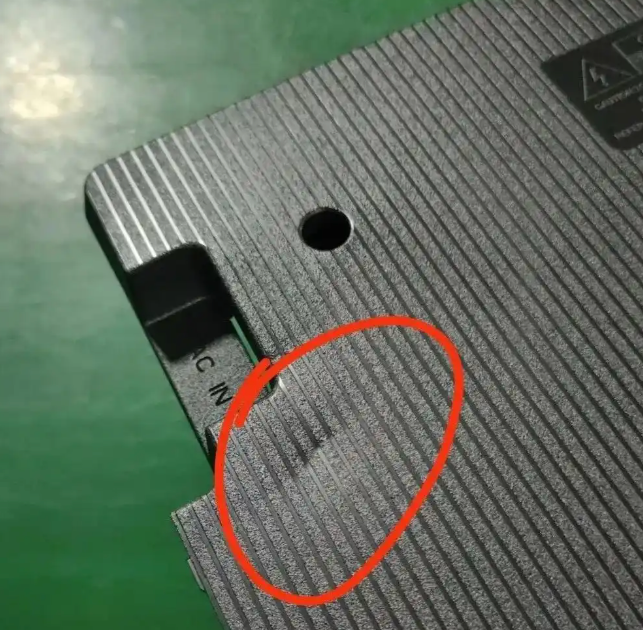
Remedies: Addressing warpage often requires a multi-pronged strategy. Conformal cooling channels, designed using additive manufacturing techniques, can provide much more uniform temperature control across the mold, minimizing thermal imbalances. In the design phase, symmetrical part geometries and uniform wall sections help promote even shrinkage. Processing adjustments, such as optimizing pack and hold times and pressures, allow the material to cool more uniformly under pressure, reducing built-in stress .
Defects Related to Filling and Ejection
The mechanics of moving the plastic into the mold and subsequently removing the finished part also present opportunities for defects.
Short Shots
A short shot is a catastrophic defect where the mold cavity is not completely filled, resulting in an incomplete part. This occurs when the flow of molten plastic is impeded before the cavity is full. Common causes include material viscosity being too high (not flowing easily enough), injection pressure or speed being too low, or the material solidifying prematurely due to thin wall sections. Blocked gates or nozzles can also restrict flow.
Remedies: On the processing side, increasing melt temperature lowers viscosity and improves flow. Raising injection pressure and speed forces the material into every crevice of the cavity. Design-for-manufacturing (DFM) guidelines recommend maintaining minimum wall thicknesses (typically 0.020 to 0.040 inches for many engineering resins) and ensuring that flow paths are not excessively long relative to wall thickness .
Flash
Flash is the thin, unwanted layer of plastic that extends beyond the part's geometry, usually at the parting line of the mold, around ejector pins, or at movable core slides. It is a telltale sign that molten plastic is escaping the cavity. This happens when the clamping force of the molding machine is insufficient to keep the mold closed against the injection pressure, or when the mold itself is worn, damaged, or has debris on the parting line preventing proper closure.
Remedies: The first step is often to verify that the clamp tonnage is adequate for the projected area of the part. If the machine is capable, reducing injection pressure or optimizing the transfer point (the switch from high-speed injection to hold pressure) can prevent over-packing of the cavity. Ultimately, however, flash often signals a tooling issue, requiring mold maintenance to clean, repair, or re-condition the sealing surfaces .
Poor Demolding (Ejection Problems)
Defects like surface scratches, stress whitening, or even part cracking can occur during ejection if the part does not release cleanly from the mold. This is often due to insufficient draft (taper) on the vertical walls of the part, which causes the part to stick to the cavity or core as it shrinks. A rough surface finish on the mold steel can also create excessive friction.
Remedies: Industry best practices dictate including a draft angle of at least 0.5 to 1 degree per side on most vertical surfaces. For textured surfaces, draft angles must be increased significantly—often 1.5 to 2 degrees per 0.001 inch of texture depth . Polishing the mold steel in the line of draw and optimizing the number, location, and force of ejector pins are also critical mechanical solutions .
Defects of Material Degradation and Contamination
Not all defects are geometric; some are chemical or material-based.
Burn Marks
Burn marks appear as black, rust-colored, or orange streaks, usually at the end of the flow path or in areas where the mold is difficult to vent. They are a sign of thermal degradation. This is often caused by air trapped in the mold cavity becoming super-compressed by the advancing melt front. The temperature of this compressed air can exceed the degradation point of the polymer, literally scorching it. Burn marks can also result from material staying in the machine barrel too long or at too high a temperature, causing it to break down.
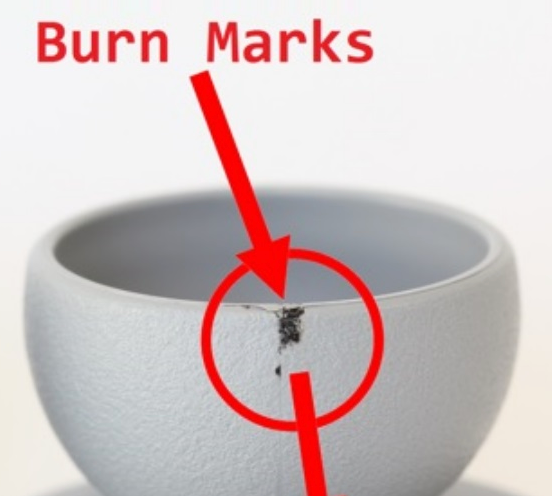
Remedies: Addressing burn marks requires attention to both the mold and the machine. Improving mold venting (adding vents or deepening existing ones) at the last areas to fill allows trapped air to escape. On the machine, reducing injection speed can slow the compression of air, giving it more time to vent. Maintaining a clean barrel and screw and using residence-time-appropriate shot sizes prevents material degradation in the machine itself .
Black Specks or Streaks
The appearance of black specks or streaks, particularly in clear or light-colored parts, indicates contamination. This can be degraded particles of the same material that have broken loose from the screw or barrel, or foreign material from contaminated regrind or an uncleaned hopper.
Remedies: A thorough purging of the machine barrel with a commercial purging compound is often the first step to cleaning out degraded material. Strict protocols for material handling, including keeping regrind clean and free of dust, and ensuring hoppers and dryers are clean, are essential preventive measures .
The Future of Defect Prevention: Smart Manufacturing
As the industry embraces the principles of Industry 4.0, the approach to managing defects is becoming increasingly predictive. Mold filling simulation software (like Moldex3D or Autodesk MoldFlow) is now a standard engineering tool, allowing designers to visualize melt front behavior, predict weld line locations, and identify potential gas traps before a single piece of steel is cut .
Furthermore, the integration of in-mold sensors (cavity pressure and temperature transducers) and real-time process monitoring systems is transforming the molding machine from a dumb press into a smart manufacturing cell. These systems can detect minute variations from cycle to cycle and either alert operators or automatically adjust parameters to keep the process within a proven, capable window. This shift from reactive quality control (inspecting and sorting bad parts) to proactive process control (preventing bad parts from being made) represents the ultimate frontier in injection molding excellence .
In conclusion, the journey to producing flawless injection molded parts is a continuous cycle of intelligent design, precision toolmaking, and scientific processing. By understanding the fundamental causes of common defects and leveraging the latest in simulation and control technologies, manufacturers can navigate the complexities of the molding maze and deliver components of the highest quality to an ever-demanding market.
Related product and article resources
For procurement comparison and technical evaluation, readers can continue with these related product pages and supporting articles.