

Appliance Housing Plastic Injection Molding Service
Injection Molding of Appliance Housings: Combining Aesthetics with Functionality
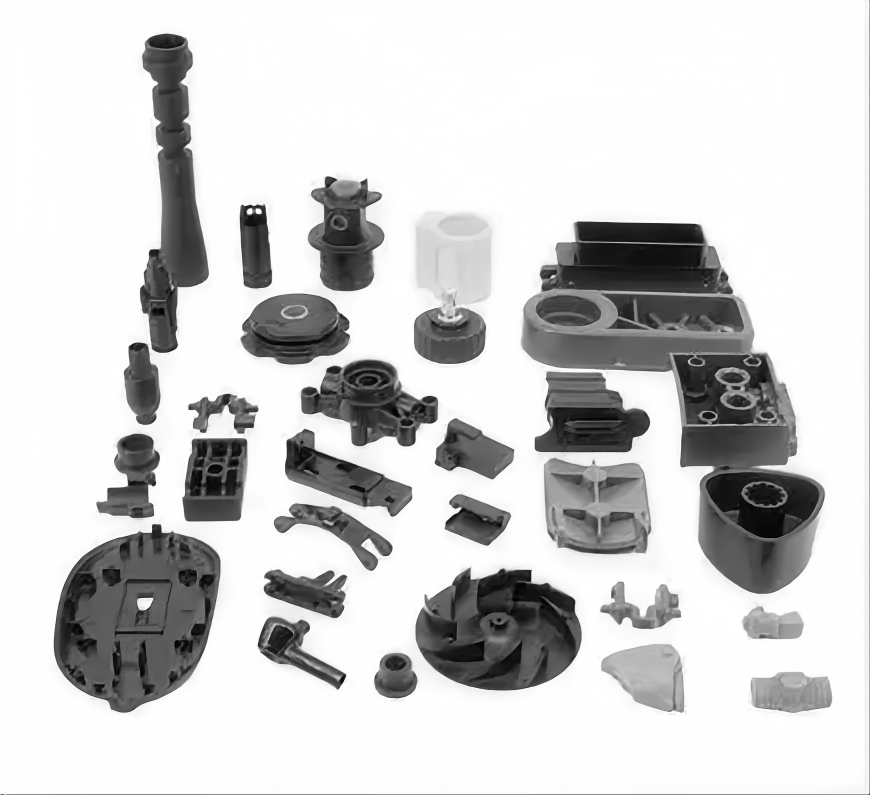
1. Introduction: The Face of Modern Appliances
Appliance housings represent one of the most demanding applications in injection molding. These components serve as both the protective enclosure for internal mechanisms and the visible interface between product and user. From vacuum cleaners and power tools to kitchen appliances and consumer electronics, housings must satisfy conflicting requirements: structural integrity and aesthetic appeal, dimensional precision and design freedom, durability and cost-effectiveness.
Injection molding has emerged as the predominant manufacturing process for appliance housings due to its ability to produce complex geometries with excellent surface finish, tight tolerances, and high production efficiency . This article explores the specialized techniques, material considerations, and quality requirements essential for successful housing production.
2. Material Selection: Balancing Performance and Appearance
The choice of material for appliance housings depends on the application requirements, regulatory standards, and aesthetic expectations:
Common Housing Materials:
| Material | Key Properties | Typical Applications |
|---|---|---|
| ABS | Impact resistance, good surface finish, processability | Power tools, vacuum cleaners, consumer electronics |
| FR-ABS | Flame retardant (UL94 V-0), impact resistance | Electrical housings, appliances requiring safety certification |
| PC/ABS Blends | Heat resistance, impact strength, dimensional stability | High-performance appliances, automotive interiors |
| Polypropylene | Chemical resistance, flexibility, cost-effective | Kitchen appliances, food contact applications |
| Polystyrene | Rigidity, gloss finish, economy | Small appliances, disposable housings |
| PBT/GF | High strength, heat resistance, dimensional stability | Power tool housings, high-temperature applications |
| Phenolic | Heat resistance, electrical insulation | Cookware handles, electrical components |
Special Requirements:
Many appliance housings require flame-retardant grades to meet safety standards. For example, electrical housings often require UL94 V-0 ratings at specific thicknesses .Aesthetic considerations drive the need for materials with excellent surface finish, color consistency, and the ability to accept secondary operations like painting or texturing.
3. Design Considerations for Appliance Housings
Successful housing design requires careful attention to several critical factors:
Wall Thickness Management:
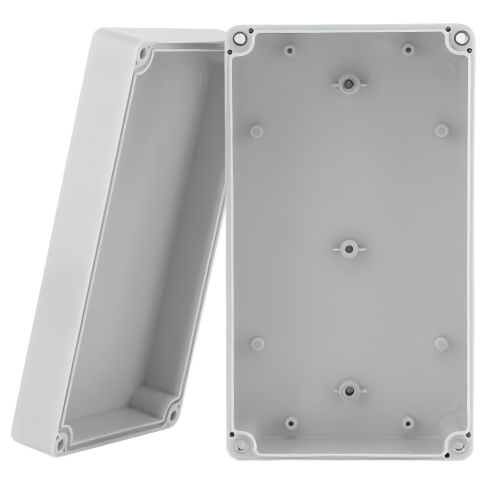
Uniform wall thickness is essential to prevent sink marks, warpage, and internal stresses. For the electrical box case study, wall thickness ranged from 1.0mm to 2.8mm, with careful transitions between thick and thin sections . Thick sections should be cored out, and ribs should be 40-60% of adjacent wall thickness.
Draft Angles:
To ensure easy ejection and prevent surface damage, draft angles of 1-2° per side are standard. For the electrical box, a 1° draft was specified to facilitate ejection while maintaining surface quality .
Radii and Corners:
Sharp corners create stress concentration points and impede material flow. Generous radii at all internal and external corners are essential. The electrical box design incorporated appropriate radius transitions to avoid stress concentration and cracking .
Assembly Features:
Housings often require:
Snap-fits for assembly without fasteners
Bosses for screw assembly
Ribs for structural reinforcement
Alignment features for proper mating of halves
Tolerance Considerations:
Appliance housings typically require fit tolerances with mating components. The electrical box specified≤0.5mm (clearance ≤0.5mm) with the mating housing, and dimensional accuracy per GB/T14486-MT5 .
4. Mold Design for Appliance Housings
The mold is the heart of successful housing production. Key considerations include:
Gate Design and Placement:
Gate location significantly impacts appearance and performance. For the electrical box, a direct sprue gate was chosen to ensure rapid cavity filling and minimize visible gate marks on the top surface . Mold flow analysis (MoldFlow) was used to optimize gate diameter and position.
Gate Selection Guidelines:
Direct gates for single-cavity, cosmetic parts
Edge gates for multi-cavity production
Submarine gates for automatic degating
Fan gates for large, thin-walled areas
Valve gates for sequential filling of large parts
Cooling System Design:
Effective cooling determines cycle time and dimensional stability. The electrical box mold employed a one-in-one-out cooling channel system with 10mm diameter channels and baffles strategically positioned . Temperature uniformity across the mold surface is critical (±3-5°C) to prevent warpage.
Venting Requirements:
Inadequate venting causes burning, short shots, and poor surface finish. The electrical box incorporated venting channels at flow path ends and weld line locations, with vent depth ≤0.03mm to prevent flash .
Ejection System:
For complex housings with ribs and bosses, strategic ejector placement is essential. The electrical box used 4×12mm special-shaped ejector pins at rib locations to ensure clean ejection without part damage .
Sliding Mechanisms:
Housings with side holes or undercuts require sliders for side core pulling. The electrical box employed two sliders with 13° and 16° angles, guided by angled guide pins .
5. Processing Parameters and Quality Control
Temperature Management:
For flame-retardant ABS (FR-ABS), typical processing parameters include:
| Parameter | Range | Critical Notes |
|---|---|---|
| Nozzle Temperature | 225-240°C | Prevents drool and degradation |
| Front Zone | 230-245°C | Final melt preparation |
| Middle Zone | 210-230°C | Gradual temperature increase |
| Rear Zone | 185-195°C | Gentle melting |
| Mold Temperature | 60-80°C | Controls surface finish and cycle time |
| Injection Pressure | 40-70 MPa | Adjust for complete filling |
| Injection Time | 10-15 seconds | Prevents premature freezing |
| Cooling Time | 18-22 seconds | Determines cycle efficiency |
| Total Cycle | 31-40 seconds | Optimized for production |
For PBT+GF30 materials, higher temperatures are required (230-270°C melt temperature) with injection speeds as fast as possible to prevent premature freezing .
Common Defects and Solutions:
| Defect | Cause | Solution |
|---|---|---|
| Sink Marks | Insufficient packing, thick sections | Increase holding pressure/time, redesign thick areas |
| Weld Lines | Multiple flow fronts, low temperature | Increase melt/mold temps, relocate gates |
| Flow Marks | Slow injection, low mold temperature | Increase injection speed, raise mold temp |
| Flash | Excessive pressure, worn tooling | Reduce pressure, repair mold |
| Warpage | Non-uniform cooling, differential shrinkage | Improve cooling uniformity, adjust parameters |
| Surface Defects | Contamination, moisture | Verify material drying, clean equipment |
6. Advanced Techniques for Appliance Housings
Multi-Material Molding:
Modern appliances increasingly demand multi-material housings combining rigid structures with soft-touch surfaces. AE Plast's production of Dremel tool housings demonstrates this sophistication: a 3K (three-component) design with gray 35% glass-filled nylon base, black TPE soft-touch grip, and blue glass-filled nylon trim elements. -
The process uses a 440-ton Engel victory machine with vertical rotary table, creating the three components in just two injection steps . This approach:
Eliminates secondary assembly operations
Provides perfect material bonding
Enables complex ergonomic designs
Reduces overall production costs
In-Mold Decoration:
For housings requiring graphics, labels, or decorative finishes, in-mold decoration (IMD) integrates these elements during molding, eliminating post-mold painting or printing.
Gas-Assist Molding:
For thick-section housings or handles, gas-assist technology creates hollow channels that reduce weight, eliminate sink marks, and shorten cycle times.
Clean Room Molding:
For medical device housings or electronics requiring contamination-free environments, clean room molding with ISO Class 7 or better conditions is essential .
7. Quality Standards and Certification
Appliance housings must meet stringent quality and safety standards:
Regulatory Requirements:
UL 94: Flame retardancy ratings (V-0, V-1, V-2)
IATF 16949: Automotive quality management
ISO 13485: Medical device quality management
FDA Compliance: For food contact applications
Quality Control Measures:
First Article Inspection: Complete dimensional verification
Statistical Process Control (SPC) : Monitoring key parameters
Visual Inspection: Surface quality under controlled lighting
Dimensional CMM: For critical mating features
Functional Testing: Assembly verification, drop testing
Case Study: Color Consistency Challenge
A Chinese molder producing electrical surge suppressor housings faced 15% scrap rates due to color inconsistency with FR-ABS and concentrated pigment additives. By switching to pre-colored Geon™ vinyl compounds, they:
Eliminated color variation issues
Reduced scrap dramatically
Saved $100,000 in operational costs
Improved surface appearance and consistency
8. Sustainability Considerations
Recycled Content:
Appliance manufacturers increasingly specify recycled materials. Post-consumer recycled (PCR) ABS and PP are now available for housing applications, though careful quality control is essential.
Design for Recycling:
Mono-material designs facilitate recycling
Easy disassembly features enable material separation
Material identification markings aid sorting
Energy Efficiency:
Modern all-electric and hybrid machines reduce energy consumption by 25-50% compared to hydraulic machines. AE Plast's Engel victory machines with servo-hydraulic drives achieved 25% average energy savings, with motors idling during cooling phases that account for nearly half the 52-second cycle .
9. Conclusion
Appliance housing injection molding combines art and engineering, demanding expertise in material science, tool design, process optimization, and quality management. Success requires:
Appropriate Material Selection: Balancing mechanical, thermal, aesthetic, and regulatory requirements
Robust Mold Design: Proper gating, cooling, venting, and ejection systems
Optimized Processing Parameters: Precise temperature, pressure, and timing control
Comprehensive Quality Systems: Statistical process control and rigorous testing
Innovation Adoption: Multi-material techniques, automation, and sustainability initiatives
As appliances become smarter, more connected, and more aesthetically demanding, injection molding technology continues to evolve. Manufacturers who master these complexities will deliver housings that not only protect and contain but also delight users through superior appearance, feel, and durability.
Related Plastic Manufacturing Services
Buyers comparing this project can also review these related Samgo Plastics services for product development mold making and injection molding planning.
What exactly are your OEM services?
Our OEM (Original Equipment Manufacturing) service allows you to bring your unique outdoor gear ideas to life. We handle the entire product development and manufacturing process based on your specifications, designs, and brand requirements. From initial concept and material sourcing to prototyping, production, and quality control, we become your dedicated manufacturing partner. Your brand logo and identity will be applied to the final products.What is your MOQ (Minimum Order Quantity)?
We understand that brands need flexibility, especially when launching new products. Therefore, we offer flexible MOQs, which vary depending on the product complexity, materials required, and customization level. We encourage you to discuss your project with us, and we will do our best to propose a feasible MOQ.Can you help us develop a product from just an idea or a sketch?
Absolutely! We specialize in turning concepts into high-quality, market-ready products. Our product development team will work closely with you to refine your idea, select appropriate materials, create technical drawings, and develop prototypes until your vision is perfectly realized.What are the typical steps in the OEM process with your company?
1.Initial Inquiry & Consultation: You share your concept, target market, and requirements. 2.Quotation & Agreement: We provide a detailed quotation, and once approved, we sign a service agreement. 3.Research & Development (R&D): Our team works on technical designs, material selection, and sample development. 4.Prototyping: We create a physical prototype for your evaluation and feedback. 5. Molds:After design confirming, we will creat mold before production. 5.Sample Approval: You approve the final sample, confirming quality, design, and functionality. 6.Mass Production: Upon your production order confirmation, we begin manufacturing your products. 7.Rigorous Quality Control (QC): We conduct inspections throughout production and a final random inspection before shipment. 8.Shipping & Delivery: We securely pack and arrange shipment to your designated destination.How long does the entire process take from concept to delivery?
The timeline varies significantly based on product complexity and order quantity. A general estimate is: Development & Sampling: 4-8 weeks. Mass Production: 4-6 weeks after sample approval. Please note that this is an estimate, and a precise timeline will be provided with your project quotation.Who owns the intellectual property (IP) and mold/tooling for the custom products?
You retain 100% ownership of your brand identity, designs, and product IP. For any custom molds or tooling created specifically for your project, ownership can be transferred to you upon agreement. We strictly adhere to confidentiality and will never use your designs for other clients.How do you determine the price for an OEM order?
The unit price is determined by several factors, including: Product complexity and design Cost of raw materials Labor and manufacturing processes involved Order quantity Packaging requirements We strive to offer competitive pricing without compromising on quality.What is your quality control process?
Quality is our top priority. Our QC process includes: Incoming Quality Control (IQC): Inspection of all raw materials. In-Process Quality Control (IPQC): Checks during key stages of production. Pre-Shipment Inspection (PSI): A final random inspection of finished products against your approved sample and our quality standards. We can provide detailed QC reports.Can we inspect the products before they are shipped?
Yes. We highly recommend a pre-shipment inspection. You are welcome to send your own QC inspector, or you can hire a third-party inspection company to perform the check at our factory. We can also provide you with photos and videos of the production and final products.How do you handle shipping?
We have extensive experience in shipping outdoor gear globally. We can handle the logistics for you and arrange shipment via sea (for large volumes) or air (for smaller, urgent orders). We work with reliable freight forwarders to ensure a smooth process. Shipping costs will be included in your final quotation.
Related Products